

Bringing a few plants indoors to freshen up the air sounds like a wonderful idea. It’s an appealing, natural, and beautiful solution to a complicated problem, but how much do they really help? Their effectiveness is often misunderstood, and while they do offer some air-cleaning benefits, they’re no substitute for proper ventilation or professional air quality solutions—especially for major issues like mold or high levels of airborne pollutants. For serious concerns, services like mold removal from Simon Air Quality are essential.
The Myth and Reality of Air Purifying Plants
The popular belief that a handful of houseplants can scrub your home’s air clean traces back to a well-known NASA study from 1989. Researchers were looking for ways to purify air in sealed environments, like a space station, and found that common houseplants could indeed absorb volatile organic compounds (VOCs) like formaldehyde and benzene. This single study created a widespread belief that plants are a primary solution for indoor air pollution.
But here’s where the myth starts to unravel. The NASA experiment took place in a small, completely airtight chamber. Your living room is a completely different story. With air constantly moving through windows, doors, and ventilation systems, the real-world conditions are nothing like that sealed lab environment. The constant introduction of new pollutants and air exchange means plants have a much harder job than they did in the lab.
The Science Behind the Hype
A comprehensive review of studies in 2019 put things into perspective. To get the same air-purifying effect seen in the NASA study, you’d need an absolutely impractical number of plants. The research estimated you’d need somewhere between 10 and 1,000 plants per square metre of floor space to make a real dent in air pollution. This makes it clear that while plants help, they cannot be the only line of defense.
This doesn’t mean your plants are doing nothing. They bring a host of other benefits, from boosting your mood and lowering stress to simply bringing a bit of nature inside. They do help with air quality, just not on a scale that can solve serious contamination problems like hidden mold growth or high levels of radon gas.
Think of your houseplants as one small piece of a much larger air quality strategy. They are a helpful supplement, not the primary fix for significant airborne contaminants like mold spores.
Setting Realistic Expectations
It’s so important to understand what plants can and cannot do for your home’s air. They aren’t a magic wand for getting rid of persistent dust, pet dander, or, most critically, mold spores. These kinds of problems usually point to deeper issues in your home. Pollutants can seep into your house from all over, which you can learn more about in our detailed guide on common indoor air pollution sources and how to prevent them.
So, while your snake plant might absorb tiny amounts of formaldehyde, it can’t do a thing about a hidden mold colony growing behind a wall. For serious concerns like that, you need professional help. Relying only on plants can mask these underlying issues, giving them time to get worse. A truly healthy home requires a layered approach, where plants play a supportive role, but professional services like mold removal from Simon Air Quality tackle the root cause of the problem.
How a Houseplant Actually Cleans the Air
To really get what’s happening when you hear about indoor plants for air purification, it helps to peek behind the curtain at the science. It’s pretty fascinating. Think of a plant’s leaves as thousands of tiny vacuum cleaners for your room’s air. They’re covered in little pores, called stomata, that literally pull airborne pollutants out of the air and into the plant.
This is the first move in the plant’s air-cleaning playbook. The leaves inhale common household toxins we call Volatile Organic Compounds (VOCs). These are the invisible fumes off-gassed from everyday stuff like new furniture, paint, and even some cleaning supplies. We’re talking about nasty things like formaldehyde and benzene, which can contribute to poor indoor air quality.
But the real magic isn’t happening in the leaves. Once the plant has captured these pollutants, it sends them down the stem to the root system. Down in the soil, there’s a whole bustling ecosystem of microorganisms that act like a natural breakdown crew, metabolizing the toxins and rendering them harmless.
This whole process has a scientific name: phytoremediation. It’s a powerful partnership between the plant and the microbes living in its soil. These microbes essentially eat the captured toxins, breaking them down into harmless compounds that the plant can then use as food. It’s an amazing, self-sustaining, living air filter that works 24/7.
This visual gives a great snapshot of how some popular houseplants get to work on cleaning up your indoor environment.

You can see a few heavy hitters like the snake plant and peace lily, which helps connect the dots on how greenery can contribute to better air.
The Two-Part Filtration System
A lot of people think it’s just the leaves doing all the air-cleaning work, but that’s only half the story. A plant’s purification power is a team effort between the foliage and the soil.
- The Leaves (The Intake): Think of the leaves as the first point of contact. They act like a net, snagging gaseous pollutants out of the air through their stomata. This is the first step in removing chemicals from your breathing space.
- The Soil (The Processing Plant): This is where the real heavy lifting happens. The soil and its microbial community get to work neutralizing the harmful compounds, making sure they don’t get released back into your home. The healthier the soil, the more effective the filtration.
This tag-team approach is what makes houseplants a unique, if modest, player in an overall air quality strategy. The catch is, their effectiveness is limited. In a regular home, this natural system just can’t process air fast enough to keep up with the constant flow of new pollutants from various sources.
While plants are nature’s own air filters, they operate on a much smaller scale than any mechanical system. When you’re dealing with significant issues like mold spores or high levels of allergens, this biological process simply isn’t powerful enough to protect your health.
Why This Process Matters for Your Home
Understanding how this works helps set some realistic expectations. Yes, your spider plant is doing its part to pull some formaldehyde from the air, but it’s completely outmatched by bigger threats like mold. In fact, overwatered plants can create a damp environment that actually helps mold thrive. If you’re smelling a persistent musty odor, that’s a clear sign you need more than a few potted plants.
That’s where professional help becomes non-negotiable. Services like Simon Air Quality’s mold testing and removal are designed to find the source of serious indoor air threats and eliminate them for good. The best approach is to combine the gentle, ongoing filtering of plants with professional solutions for major problems. Your plants are great for daily maintenance, but for real remediation, you need the experts.
Choosing The Best Air-Purifying Houseplants

Now that you’ve got a handle on how plants can help clear the air, it’s time for the fun part: picking out the right green roommates for your home. But choosing the best indoor plants for air purification isn’t just about what catches your eye at the garden centre. It’s a matchmaking process—pairing a plant’s specific skills and needs with your home environment and lifestyle.
Some plants are absolute rockstars at filtering certain chemicals, while others are incredibly tough and perfect for anyone who’s just starting their plant journey. To make an informed choice, consider your home’s light levels, your watering habits, and whether you have pets or small children.
To help you decide, we’ve pulled together a list of some of the most popular and effective air-purifying houseplants out there. Think of them as a small green team you can assemble, each with its own unique talents. Just remember, a healthy plant is a hard-working plant, so picking one you can actually keep alive is the most important first step.
Profiles Of Top Air-Purifying Plants
Here are a few of the all-stars from the plant world, celebrated for both their air-cleaning muscle and their ability to thrive indoors.
1. Snake Plant (Sansevieria trifasciata)
The Snake Plant is, without a doubt, one of the toughest houseplants you can find, making it a dream for new plant parents. Its stiff, architectural leaves don’t just look cool; they’re powerhouses when it comes to air purification. This plant is especially good at removing nasty toxins like formaldehyde, benzene, xylene, and nitrogen oxides.
What really sets it apart is its ability to perform photosynthesis at night, pumping out fresh oxygen while you sleep. This makes it a fantastic addition to any bedroom. It practically thrives on neglect, happy in bright, indirect light but also tolerating very low light, and it doesn’t need much water. Just be careful: this plant is toxic to cats and dogs if they take a nibble.
2. Spider Plant (Chlorophytum comosum)
Known for its gracefully arching leaves and the little “spiderettes” it sends out (which you can easily repot!), the Spider Plant is another low-maintenance champion. It’s brilliant at tackling formaldehyde, a common VOC that off-gasses from things like pressed wood furniture and cabinets. It also helps filter out xylene and carbon monoxide.
Spider Plants are incredibly forgiving. They do best in bright, indirect light but will make do in shadier spots. The key is to keep their soil consistently moist but never soggy. Best of all, the Spider Plant is non-toxic and completely safe for pets, so you don’t have to worry about curious cats or dogs.
Resilient And Effective Options
These next plants are also fantastic purifiers that are known for being adaptable to various indoor conditions.
3. Peace Lily (Spathiphyllum)
With its lush, dark green foliage and elegant white flowers, the Peace Lily is far more than just a decorative piece. It’s exceptional at removing a whole cocktail of common household toxins, including ammonia, benzene, formaldehyde, and trichloroethylene. Since ammonia is often found in cleaning products, it’s a great plant to keep in kitchens and bathrooms.
Peace Lilies do well in medium, indirect light and have a handy trick: they’ll tell you when they’re thirsty. Their leaves droop dramatically, making it hard to get the watering wrong. A quick heads-up: The Peace Lily is toxic to both cats and dogs.
4. English Ivy (Hedera helix)
English Ivy is a timeless, versatile vine that looks beautiful in a hanging basket or when trained to climb. It has a unique talent for filtering airborne fecal matter particles, which makes it a surprisingly smart choice for bathrooms. It also goes to work on formaldehyde, benzene, xylene, and toluene.
This classic plant likes bright, indirect light and soil that stays evenly moist. Be warned, though—it can sometimes attract pests like spider mites if it isn’t happy. Keep in mind that English Ivy is toxic to pets and people if ingested.
Comparing Top Air-Purifying Houseplants
Feeling a little overwhelmed by the options? Not to worry. This quick-reference table breaks down the key features of our top picks to help you find the perfect match for your home.
| Plant Name | VOCs Removed | Light Needs | Pet Safe |
|---|---|---|---|
| Snake Plant | Formaldehyde, benzene, xylene, nitrogen oxides | Low to bright, indirect | No |
| Spider Plant | Formaldehyde, xylene, carbon monoxide | Medium to bright, indirect | Yes |
| Peace Lily | Ammonia, benzene, formaldehyde, trichloroethylene | Medium, indirect | No |
| English Ivy | Formaldehyde, benzene, xylene, toluene | Bright, indirect | No |
Use this guide to weigh what matters most to you—whether it’s top-tier toxin removal, low-light tolerance, or safety for your furry family members.
Remember, the air-purifying capacity of a plant is directly linked to its overall health. A struggling, unhealthy plant won’t be an effective filter.
Even the hardiest plants can run into trouble now and then. For tips on figuring out what’s wrong and getting your green friends back on track, check out this great guide on troubleshooting common houseplant problems. Keeping your plants thriving is the best way to ensure they’re contributing to a healthier home.
While plants are a fantastic natural supplement to your air quality strategy, they aren’t a cure-all for serious issues like mold. If you suspect you have a mold problem, it’s crucial to get professional help. At Simon Air Quality, our mold removal services can identify the root cause and make sure your home is truly safe.
The Reality Check: How Many Plants Do You Really Need?
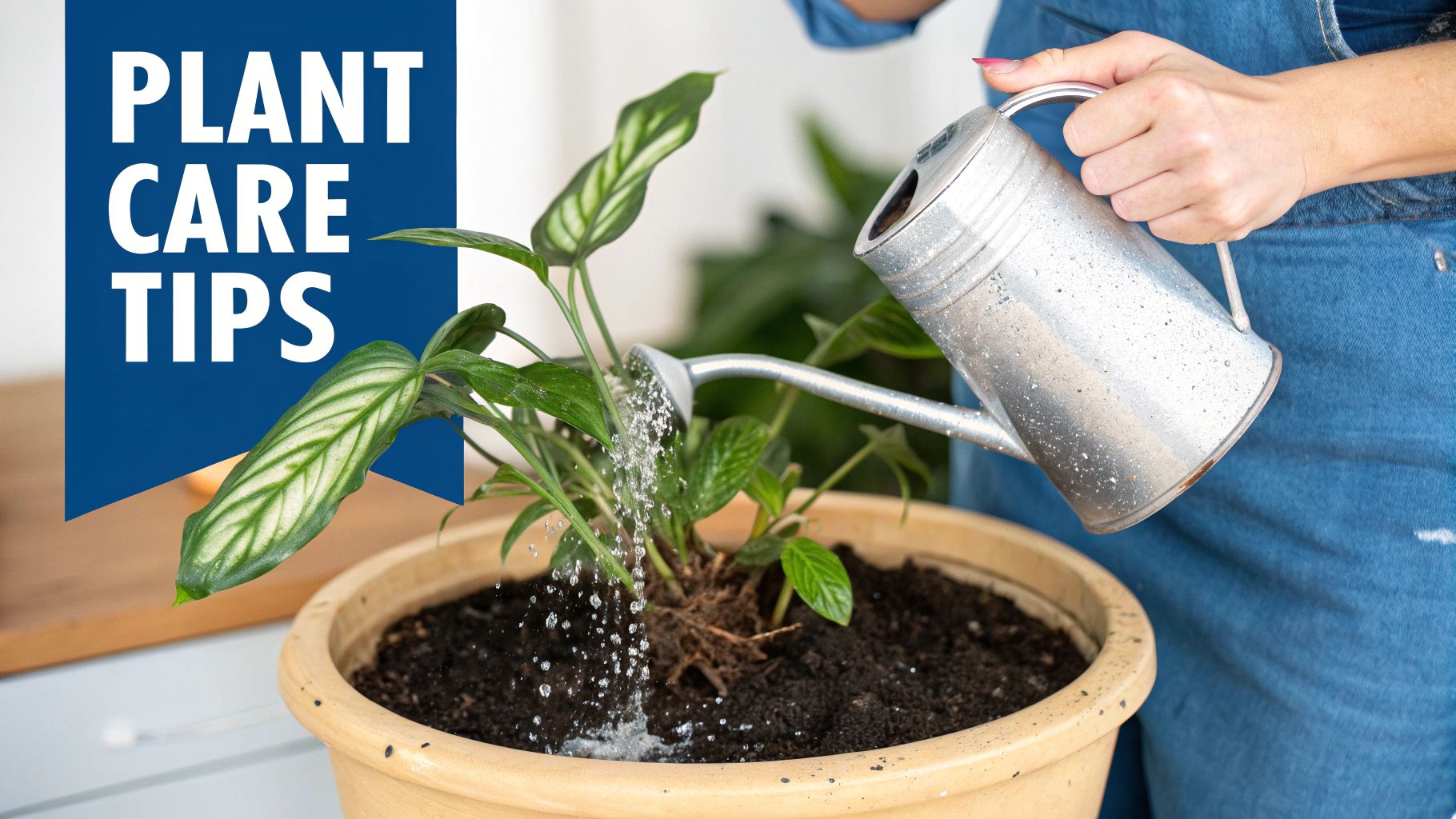
It’s the million-dollar question for anyone hoping to clean their air with a bit of greenery: how many plants does it actually take to make a difference? The idea of a few potted friends quietly scrubbing your air is a lovely one, but the reality is a matter of pure scale. Those impressive results you hear about from lab studies? They’re incredibly difficult to replicate in a normal home.
The big difference comes down to the testing environment. Famous experiments, like the one from NASA, took place in small, completely sealed chambers. Your home, on the other hand, is a much larger and more dynamic space. Air is always on the move—slipping through open doors, window cracks, and your ventilation system. This is what we call the air exchange rate, and it means your plants have a much bigger, never-ending job to do against a constant stream of new air and pollutants.
From Lab To Living Room
Let’s try to picture what this means in a real-world setting. Take an average Canadian living room, maybe around 300 square feet. To get anywhere close to the level of air purification seen in those controlled studies, you’d need to turn it into a literal jungle. Some estimates suggest it would take hundreds, if not thousands, of plants to match the cleaning power of just one decent mechanical air purifier.
Now, this isn’t meant to talk you out of having plants. They’re fantastic for your mental well-being, they bring life and beauty into a space, and they absolutely contribute—in a small way—to better air. The key is to have a clear-eyed view of their limitations and to understand they are not a substitute for professional air quality solutions.
Your houseplants are wonderful additions to your home, but for significant air quality concerns, they must be part of a much larger, more robust strategy. They are a supplement, not a solution.
NASA’s Bio-Home Experiment
To its credit, NASA did take things a step further to simulate a more realistic environment. They created a closed “bio-home,” heavily insulated and filled with synthetic materials that off-gassed VOCs, mimicking typical indoor pollution.
In this setup, they found that placing 15 to 18 air-purifying plants in medium-sized pots (18–24 cm in diameter) could make a real dent in VOC concentrations like formaldehyde and benzene. This shows the potential of plants in tightly controlled spaces. You can read more about these fascinating findings on plant-based decontamination right from the source.
But even this more advanced experiment highlights the core challenge. As promising as these lab results are, their effectiveness in a typical Canadian home or office is another story. Our homes just aren’t sealed environments. Your single snake plant simply can’t keep up with the off-gassing from new furniture, cooking fumes, and outdoor pollutants all coming at it at once.
The Verdict on Plant Density
So, what’s the big takeaway? While packing your home with enough plants to get lost in would certainly improve your air, it’s not a practical strategy for most people. For day-to-day, low-level VOCs, your plants are a helpful, natural ally that contribute to a feeling of well-being.
But when you’re up against more serious or persistent air quality issues, you need to think bigger. Problems like dust, allergens, radon, or the musty smell of potential mold require much more powerful solutions. These are issues that a few potted plants, no matter how leafy, just can’t solve.
For genuine peace of mind about what’s in your air—especially when it comes to invisible threats like radon gas or hidden mold—professional testing is the only way to be certain. At Simon Air Quality, we offer expert radon services and mold removal services to tackle these serious risks right at the source, ensuring your home is safe for your family.
Building Your Complete Home Air Quality Strategy
While indoor plants for air purification are a fantastic, natural addition to any home, it’s best to think of them as just one player on a much larger team. To truly create a healthy indoor environment, you need a multi-layered defense that tackles pollutants from every possible angle. Your plants are part of a holistic system, not a standalone cure.
Think of your plants as a gentle, continuous support system. They work away quietly in the background. But for the bigger threats, you’ll need more powerful tools and smarter strategies. A complete approach goes beyond just adding a few pots of greenery; it focuses on three core ideas: cutting down pollution at its source, actively cleaning the air you already have, and making sure your home can breathe with proper ventilation.
Creating Layers of Air Defense
The most effective way to guarantee healthy indoor air is to combine several methods. Each layer in your strategy can handle a different type of pollutant, creating a much stronger defence than any single solution could ever provide on its own.
Your first line of defense should always be source control. It’s simple, really: be mindful of what you bring into your house in the first place. When you choose low-VOC (Volatile Organic Compound) paints, furniture, and cleaning products, you dramatically cut down on the chemical fumes that your plants and purifiers have to deal with. This is a proactive step that pays huge dividends.
Next up is active filtration. A high-quality air purifier equipped with a HEPA filter is non-negotiable for capturing the tiny particles that plants simply can’t touch. These filters are absolute workhorses, unmatched at pulling things like dust mites, pet dander, pollen, and even dangerous mold spores right out of the air. When you combine plants for VOCs with a HEPA purifier for particulates, you’ve got most of your bases covered.
The Critical Role of Professional Intervention
Some air quality problems are just too serious for houseplants or an off-the-shelf purifier to handle. If you’re dealing with persistent musty odors, seeing strange discoloration on walls or ceilings, or suffering from unexplained allergy flare-ups, those are all red flags. They often point to a hidden mould problem, which poses a serious health risk.
Relying on houseplants or an air purifier to fix a mold issue is like using a bucket to stop a flood. You might catch some of the overflow, but you aren’t addressing the broken pipe. Mold must be eliminated at its source.
This is where calling in a professional becomes absolutely essential for your family’s health. Hidden mold can release millions of spores into your air, potentially leading to serious respiratory issues and other long-term health problems. The only way to deal with this for good is with expert help.
At Simon Air Quality, we provide professional mold removal services to pinpoint the exact location of the growth, even if it’s hiding behind walls or under flooring. Our certified technicians use specialized equipment to safely contain and eliminate the entire colony, making sure it doesn’t come back. Taking this step is the single most important thing you can do if you suspect a hidden threat in your home.
Integrating Ventilation and Monitoring
Proper ventilation is the final, crucial piece of the puzzle. When air gets trapped and stagnant, pollutants can build up to dangerous levels. It doesn’t have to be complicated—just opening your windows for 10-15 minutes each day can do wonders to flush out stale air and bring in fresh oxygen.
In spots like kitchens and bathrooms, always use the exhaust fans to vent moisture and fumes directly outside. For a more detailed breakdown of simple, effective changes you can make, you can learn how to improve indoor air quality at home with our comprehensive guide.
Ultimately, building a complete air quality strategy is about being proactive. Combine the natural benefits of your houseplants with the powerful filtration of a HEPA purifier, cut down on pollutants at their source, and never, ever hesitate to call in the pros for serious concerns like mold. This layered approach is the most reliable way to ensure the air in your home is as clean and safe as it can be.
Your Top Questions About Plants and Air Quality, Answered
Even after getting the science down, it’s totally normal to have a few more questions rattling around. So, let’s clear the air. This section tackles the most common questions we get, helping you bring plants into your home in a way that’s both smart and effective.
My goal here is to address the practical, day-to-day stuff and bust a few myths. Think of it as the final piece of the puzzle, giving you the confidence to make the best choices for your home’s environment. Let’s dig in.
Can Plants Get Rid of Mold Spores?
This is a big one, and the answer is a straight-up no. While a plant’s leaves might passively catch a bit of airborne dust, they are not a solution for a mold problem. Mold is a much more serious issue that requires a specific, professional game plan to fully eradicate. Mold spores are microscopic and require targeted removal.
In fact, if you’re not careful, plants can actually make a mold problem worse. Constantly overwatering your plants creates soggy soil—the perfect breeding ground for mold and mildew, which then pump even more spores into your air. If you see mold or smell that distinct musty odor, your only real move is to call a professional. A service like Simon Air Quality’s mold removal service can run proper mold tests and handle remediation to get to the root of the problem for good.
How Long Does It Take for Plants to Start Cleaning the Air?
Plants get to work pretty much as soon as you bring them home. Once they’ve settled in, their leaves start absorbing gases right away as part of their natural cycle. This process, called phytoremediation, is constant and ongoing as long as the plant is healthy.
But seeing a real, measurable difference in a room’s air quality is a much slower burn. The actual impact depends on a bunch of factors: how many plants you have, the size of your space, how well your home is ventilated, and just how many pollutants you’re dealing with. If you need a significant and fast improvement, especially for high pollutant levels, a high-efficiency mechanical air purifier is always going to be the more powerful tool.
While plants are constantly doing their thing in the background, their purifying effect is subtle and builds over time. They simply aren’t a quick fix for serious air quality issues.
It’s really important to understand what plants can’t do, because long-term exposure to bad air can lead to some serious issues. You can learn more about how poor indoor air quality negatively affects health in our detailed guide on the topic. Knowing the signs of a problem is the first step toward finding a real solution.
If I Have Plants, Do I Still Need an Air Purifier?
Yes, absolutely. In fact, you should have both. Think of plants and air purifiers as a fantastic team—they work together because they’re specialists at targeting different kinds of pollutants. They are not interchangeable; they are complementary tools.
- Plants: These leafy wonders are brilliant at breaking down certain gaseous pollutants, especially Volatile Organic Compounds (VOCs), by metabolizing them. They excel at handling chemical-based toxins.
- HEPA Air Purifiers: These machines are champions at trapping tiny physical particles. We’re talking about the microscopic stuff plants can’t handle, like dust, pollen, pet dander, and dangerous mould spores.
Using both gives you the most complete defense for your indoor air. The plants handle the chemicals while the purifier grabs the particles. It’s a win-win for a healthier home.
Are There Any Risks to Using Plants to Purify Air?
The main risks are almost always tied to how you care for them, and thankfully, they’re completely preventable with a little knowledge.
The number one mistake people make is overwatering. This doesn’t just kill the plant with root rot; it creates that damp, moldy soil that actually makes your air quality worse—the very thing you were trying to fix! Always check if the soil is dry before watering.
Another key point: many of the best air-purifying plants—like the Peace Lily, Snake Plant, and English Ivy—are toxic to pets and kids if they’re chewed on or eaten. Before you bring any new plant home, do a quick check to see if it’s toxic, especially if you have curious pets or little ones. Always make sure to place any potentially harmful plants far out of their reach. Beyond just purifying the air, homeowners often have other practical questions, like learning how to safely move your houseplants when it’s time to relocate. Good planning and care ensure your green friends stay a healthy, safe, and positive part of your home.
For serious air quality concerns that go beyond what plants can handle, Simon Air Quality provides professional solutions. From comprehensive mold removal services to expert radon services, we address the root causes of indoor pollution to ensure your home is truly safe and healthy. Visit simonairquality.com to schedule an assessment.


