

Finding mold on your carpet can be unsettling, but tackling it begins with confirming that mold is indeed the problem. Often, the first sign is a distinct, musty odor that lingers in the room. This smell is a classic indicator of mold growth. Once you’ve detected the scent, the next steps are to locate the source of the mold and, most critically, identify and fix the moisture issue that’s allowing it to thrive.
For very small, surface-level spots, a simple DIY solution using household vinegar and water can sometimes be effective. However, the most crucial part of any cleanup, and a step that cannot be overstated, is ensuring the carpet is completely and thoroughly dried afterward. If any moisture remains, you are essentially creating a perfect environment for the mold to return, often worse than before.
How to Spot Mold Growth in Your Carpet
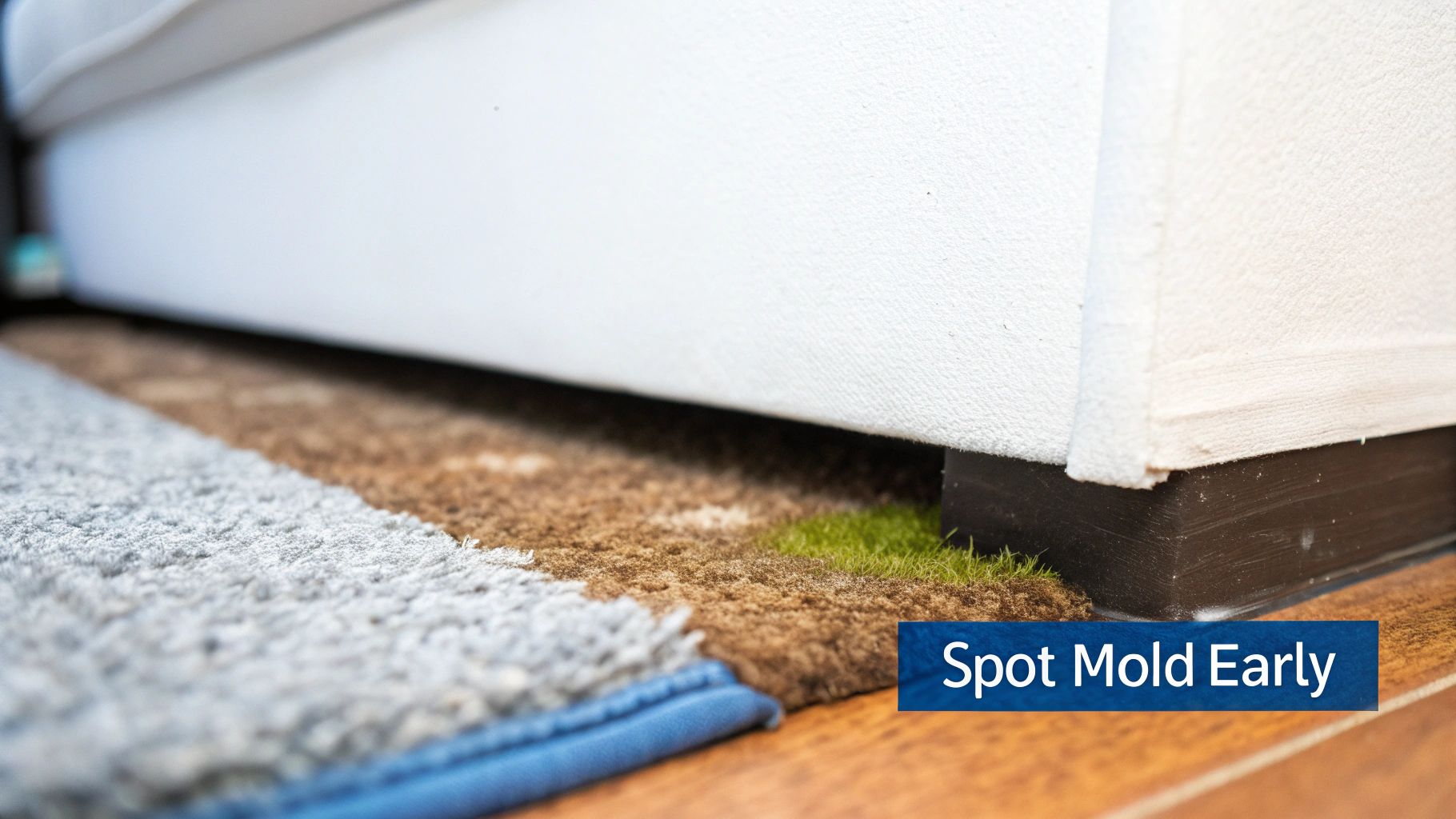
That persistent musty smell is often the very first red flag that you’ve got a hidden mold problem brewing. Before you begin any cleanup efforts, it is vital to confirm the presence of mold. This is because mold can be quite deceptive, often growing in hidden areas until it has established a significant colony.
Visual and Sensory Clues
The most straightforward method to confirm your suspicions is a visual inspection. Get down on your hands and knees and examine the carpet closely, looking for any signs of discoloration. Mold can appear in various colors, commonly as black, green, or even white patches on the carpet fibers. The texture of these patches might also seem unusual, appearing fuzzy, slimy, or powdery.
These moldy spots often appear in low-traffic areas that are easily overlooked. Pay close attention to areas under furniture, in dark corners, or near walls where a slow, hidden leak might be occurring. For example, a common scenario is a homeowner discovering a large mold patch under a rug near a poorly sealed patio door after a rainy season. Another frequent cause is condensation buildup on a cold exterior wall, leading to mold growth behind a couch that has been pushed tightly against it.
Don’t neglect your sense of touch. If a particular area of your carpet feels unusually damp, cool to the touch, or even just slightly clammy, it’s a significant warning sign. This indicates that moisture is trapped within the carpet fibers or, more problematically, in the underlying padding. This creates a perfect, dark, and damp breeding ground for mold to flourish.
Mildew vs. Mold
People often use the terms mildew and mold interchangeably, but there are key differences. While both are types of fungi, mildew is typically a surface-level problem. It usually appears as a powdery substance, often grey or white in color, and can be cleaned more easily.
Mold, on the other hand, is the more serious issue. It often has a fuzzy or slimy appearance and can penetrate deep into the carpet padding and even the subfloor below. This deeper infiltration causes far more significant damage and is much harder to eradicate completely.
When to Seek a Professional Opinion
Identifying these signs early is your most effective defense against a minor issue escalating into a major and costly remediation project. According to guidelines from the California Department of Public Health, homeowners can sometimes handle small areas of mold—typically less than 10 square feet—provided they use the correct safety equipment.
However, carpet presents a unique challenge. Because it is highly porous, simply cleaning the surface is often insufficient. The mold’s root structure, known as mycelium, can be deeply embedded in the padding and subfloor, where DIY cleaning methods cannot reach.
If you are ever uncertain about the extent of the growth or the source of the moisture, calling for a professional mold inspection is your safest and most reliable course of action. A small visible spot can often be just the tip of a much larger, hidden problem underneath.
At Simon Air Quality, our certified experts utilize specialized equipment, like thermal imaging cameras and moisture meters, to detect hidden moisture and accurately map out the full extent of the contamination. We focus on addressing the root cause of the problem, not just the visible symptoms. This comprehensive approach is the only way to ensure the mold is permanently removed, preventing future damage and protecting your home’s indoor air quality.
Your Safety Checklist Before Tackling Mold
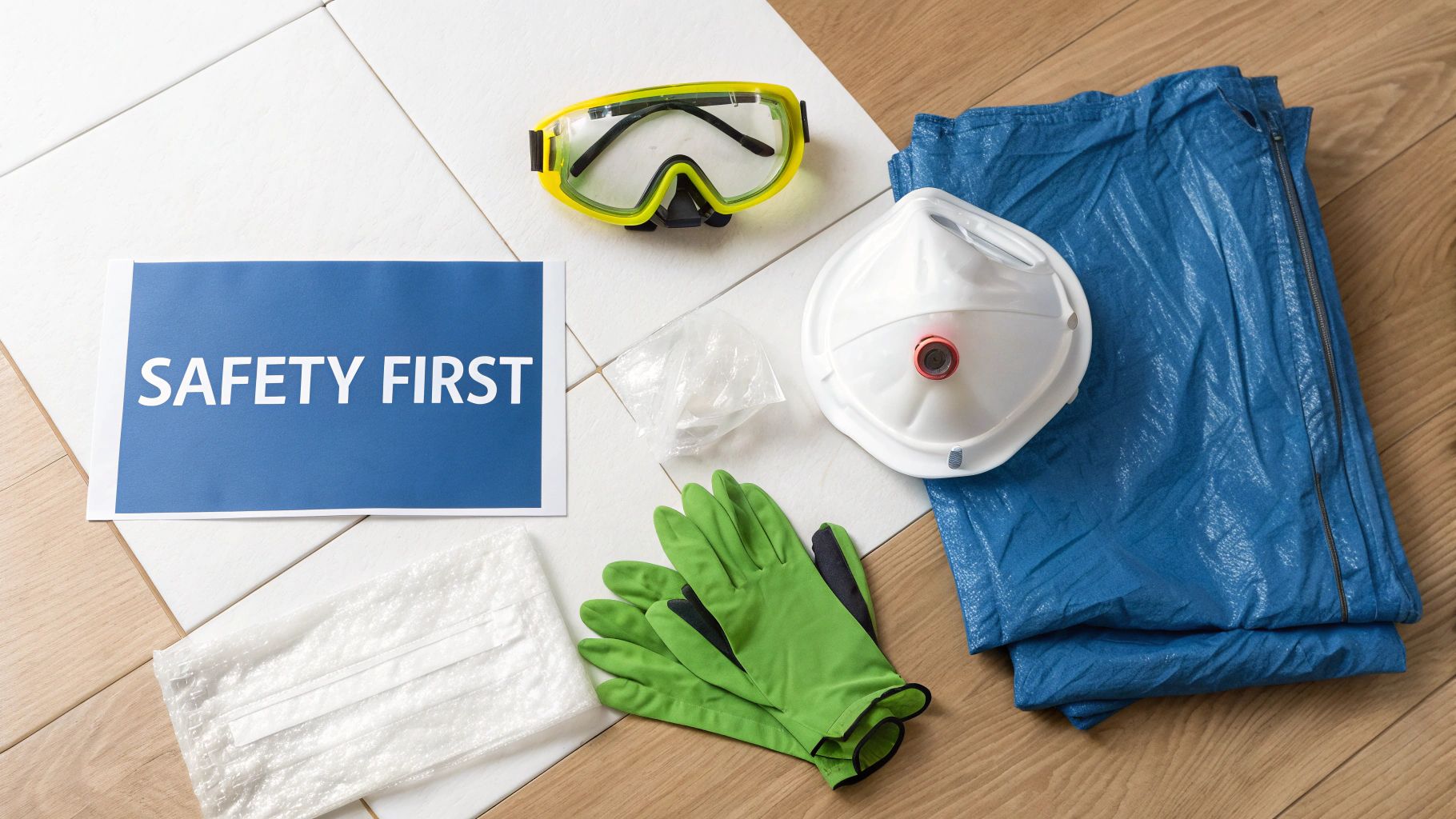
Before you even think about grabbing a cleaning brush, we need to have a serious talk about safety. This is, without a doubt, the most critical part of the entire process. The moment you disturb a mold colony, it releases millions of microscopic spores into the air. Inhaling these spores can lead to respiratory issues and other health problems, so protecting yourself is non-negotiable for any DIY mold removal attempt.
The most essential piece of personal protective equipment (PPE) you will need is an N-95 respirator mask. Do not confuse this with a simple dust mask; an N-95 is specifically designed to filter out the fine, invisible particles like mold spores. You will also need safety goggles that fully cover your eyes to protect them from airborne spores and any splashes from your cleaning solution. Finally, wear a pair of non-porous gloves, such as rubber or vinyl, to prevent direct skin contact with the mold.
Containing the Spread
Once you are properly geared up, your next priority is to prevent the mold spores from spreading throughout your home. Spores are incredibly lightweight and can easily travel on air currents. Your HVAC system can act like a superhighway, distributing them to every room. Before starting any work, shut off your furnace or air conditioner completely.
To contain the problem, you must isolate the affected room. Use plastic sheeting and painter’s tape to seal off all doorways and any air vents. If possible, open a window in the room and place a fan pointing outwards. This helps create negative air pressure, which will pull contaminated air out of the room and prevent it from drifting into other parts of your home. It’s also a wise precaution to move any uncontaminated furniture or belongings out of the room before you begin. This entire containment setup is a standard procedure for professional mold remediation companies like Simon Air Quality, and for a very good reason—it works.
Key Takeaway: Many DIY mold removal attempts fail not because the cleaning solution was ineffective, but because containment was overlooked. Neglecting proper containment can quickly turn a small, isolated mold spot on your carpet into a widespread, whole-home contamination problem.
This is an area where a professional service like Simon Air Quality provides immense value. Our technicians are highly trained in advanced containment strategies and use commercial-grade equipment like air scrubbers with HEPA filters to capture airborne spores, ensuring the rest of your home remains safe and uncontaminated. While you might only see a small visible patch, we have the tools to assess the full scope of the issue. Our guide on how to test for mold in your house can help you understand what might be hiding from view.
Taking the time to prepare properly might seem like an inconvenience, but it is the foundation of a successful and safe mold cleanup. Cutting corners here doesn’t just put your home at risk; it puts your health at risk.
Choosing The Right Mold Cleaning Solution
With your safety gear on and the area properly contained, it’s time to select your weapon against the mold. The cleaning agent you choose will depend on several factors, including the size of the mold patch, the material of your carpet, and your personal comfort level with using different types of chemicals in your home.
You essentially have two main paths to choose from: creating a natural, DIY solution from household ingredients or opting for a commercially produced mold cleaner.
Natural And DIY Mold Removal Options
For smaller, surface-level mold spots, a homemade solution can be surprisingly effective. These options are generally gentler on your carpet and safer to use in your home, though they may require a bit more manual effort and potentially multiple applications to be fully effective.
A popular and effective DIY choice is a simple white vinegar spray. The acetic acid present in white vinegar is a natural antifungal agent that can kill many common household mold species.
- Vinegar Spray Recipe: Mix equal parts of white vinegar and water in a clean spray bottle. It’s that simple.
- Application: Lightly mist the moldy area. Be careful not to oversaturate the carpet—remember, excessive moisture is the root of the problem. Allow the solution to sit for at least one hour before you begin scrubbing.
Another excellent natural option is baking soda. It not only helps to kill mold but is also highly effective at absorbing residual moisture and neutralizing the musty odors that mold leaves behind.
- Baking Soda Paste: Combine baking soda with a small amount of water to form a thick paste.
- Application: Apply the paste directly onto the mold stain, let it dry completely, and then use a stiff brush to scrub the area before vacuuming up all the residue.
While these DIY methods are great for minor issues, they have their limitations. They are most effective on surface-level mold and may not penetrate deeply enough to kill the mold’s “roots” that have grown into the carpet padding.
Commercial Mold Cleaning Products
If you are dealing with a more stubborn or larger mold problem, you will likely need to use a commercial product. When shopping for a cleaner, read the labels carefully. Look for a product that is specifically formulated for use on porous surfaces like carpets and, for maximum effectiveness, choose an EPA-registered fungicide.
One product to avoid is chlorine bleach. While bleach is a powerful disinfectant on hard, non-porous surfaces like countertops and tile, it is largely ineffective on carpets. The chemical structure of bleach prevents it from penetrating porous materials to kill the underlying mold roots. Furthermore, it will almost certainly discolor or permanently damage your carpet fibers.
To learn more about what products are both safe and potent for home use, you can explore some of the more effective home mold removal products available.
Before making a final decision, it’s helpful to weigh the pros and cons of each approach.
Comparing Mold Cleaning Solutions for Carpets
| Solution Type | Effectiveness | Safety Concerns | Best For |
|---|---|---|---|
| White Vinegar | Good for surface mold; kills about 82% of mold species. | Mild; strong odor can be irritating. | Small, fresh mold spots on colorfast carpets. |
| Baking Soda | Mildly effective at killing mold; excellent for absorbing moisture and odors. | Very safe; non-toxic. | Minor surface mold and removing musty smells. |
| Hydrogen Peroxide | More effective than vinegar; can bleach some fabrics. | Can cause skin irritation; must be used in a ventilated area. | Light-cultured carpets with moderate mold growth. |
| Commercial Cleaners | High efficacy, especially EPA-registered fungicides designed for porous materials. | Can contain harsh chemicals; requires good ventilation and PPE. | Larger, more stubborn mold patches that have penetrated deeper. |
Ultimately, the best choice depends on your specific situation. A small, fresh mold spot might be easily handled with a simple vinegar treatment. However, if you have a recurring problem, it often indicates a more significant underlying issue that requires a stronger solution—or, more likely, a call to professionals like us at Simon Air Quality.
Getting Rid of Carpet Mold: A Practical Guide
Alright, you’ve got your safety gear on and your cleaning solution picked out. Now it’s time to actually tackle that small, contained spot of mold. This is the hands-on part, but remember, patience and being thorough are your best friends here. Rushing this job is a surefire way to get a repeat visit from that unwanted fuzzy guest.
First things first, let’s apply your chosen cleaner. Whether you’re going with a homemade vinegar mix or a store-bought product, a spray bottle is your tool of choice. Lightly mist the moldy patch, making sure to cover it completely and go a little bit over the edges. The key is to dampen the carpet fibres, not soak the carpet and its underpad. Drenching the area will just add to the moisture problem that let the mold grow in the first place.
The Scrub and Wait Game
Once you’ve sprayed the solution, you need to let it sit. For vinegar solutions, an hour is usually about right, but if you’re using a commercial cleaner, always follow the directions on the label. This “dwell time” is non-negotiable; it gives the active ingredients the chance to really work their way into the fibres and kill the mold spores at the root.
After the solution has done its thing, it’s time to get scrubbing. Grab a soft-bristled brush and gently work the area in small, circular motions. The goal is to loosen the mold from the carpet fibres, not to damage them with aggressive scrubbing. A gentle touch is all that’s needed to lift the now-dead mold to the surface, which makes the next step much easier.
Why Drying is The Most Critical Step
I can’t stress this enough: getting the carpet completely dry is the most important part of this whole process. Any dampness left behind is basically a welcome mat for mold to come right back. If you have a wet-dry vacuum, now is its time to shine. It’s fantastic at pulling moisture out from deep within the carpet pile and padding.
No wet-dry vac? No problem. You can use clean, dry towels instead. Press down firmly on the area to absorb as much liquid as you can, and keep swapping for fresh towels as they get wet. Once you’ve blotted up the excess water, set up some fans to blow directly across the carpet. Placing a dehumidifier in the room will also work wonders, pulling moisture straight out of the air and speeding things up significantly.
Pro Tip: Keep those fans and the dehumidifier going for a good 24 to 48 hours—even if the carpet feels dry to the touch. Moisture can hide deep in the underpad, and getting rid of it completely is the only way to be certain the mold is gone for good.
While this DIY method works well for small spots, you have to know when to call it a day. If you’re looking at a mold patch bigger than a dinner plate, or if that musty smell creeps back after you’ve done everything right, it’s a sign of a bigger problem.
For these larger or recurring mold issues, the safest and most effective move is to bring in the professionals. The team at Simon Air Quality has the proper equipment and real-world experience to handle extensive mold remediation, making sure your home is truly safe and healthy again.
Knowing When to Call a Mold Removal Professional
While it can feel empowering to tackle a small spot of mold on your own, knowing the limits of a DIY approach is absolutely crucial. For your safety and your home’s long-term health, you need to recognize when a problem is too big to handle alone. Sometimes, what you can see is just the tip of the iceberg.
Recognizing the red flags that signal the need for a professional is probably the most important part of the entire process.
One of the clearest signs is the sheer size of the infestation. As a rule of thumb, if the mold covers an area larger than 10 square feet (think a 3-foot by 3-foot patch), it’s time to put down the scrub brush and pick up the phone. A contamination of that size requires specialized containment to stop spores from spreading all over your house—something that’s incredibly difficult to do without professional gear.
Another major tell is a persistent, musty smell that just won’t go away, even after you’ve cleaned. This almost always means the mold’s root system has dug deep into the carpet padding or even the subfloor, far beyond where your surface cleaners can reach. You’ve only cleaned what you can see, but the source is still thriving underneath.
This simple infographic shows the basic steps for a surface-level DIY cleaning.
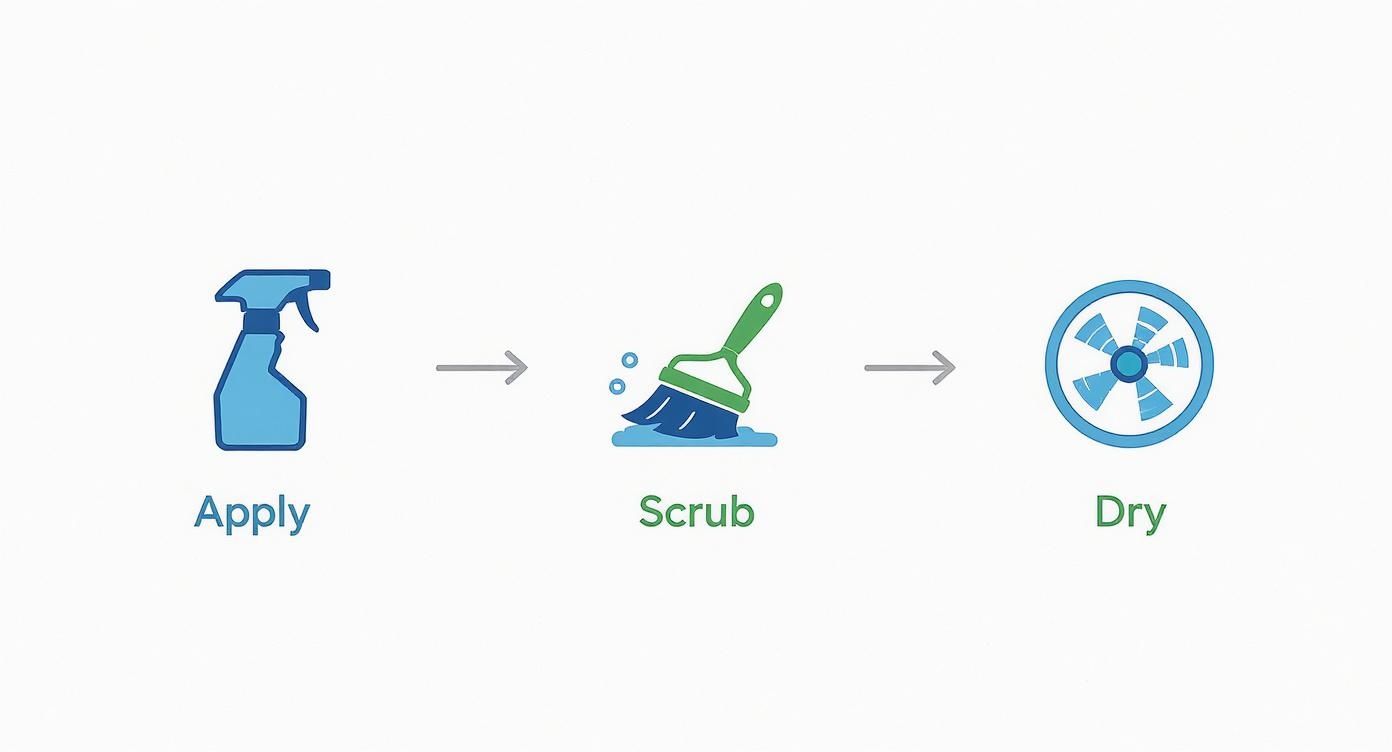
Applying a solution, scrubbing, and drying can work for minor spots. However, it does nothing to address the hidden growth or underlying moisture issues that professionals are trained to find and fix.
When Health and Hazards Are a Factor
Some situations automatically take the job out of the DIY category. If the mold is a result of contaminated water—like a sewage backup or major flood—it has to be handled by professionals. That kind of water is teeming with dangerous bacteria and pathogens that pose a severe health risk. Don’t take that chance.
Furthermore, if anyone in your household has a compromised immune system, asthma, or severe allergies, you shouldn’t attempt mold removal yourself. Stirring up a high concentration of spores during cleanup is a serious risk for vulnerable individuals.
At Simon Air Quality, our technicians use industrial-grade air scrubbers and containment barriers to keep the air safe for your family during the entire remediation. When you get a professional test, you can learn how to read mold analysis results and understand exactly what you’re dealing with.
A truly healthy home means dealing with all the invisible threats. Mold is a big piece of the puzzle, but other silent dangers, like radon gas, can also compromise your indoor environment without any obvious signs.
We believe in a complete approach to a healthy home. That’s why, on top of our expert mold remediation services, we also offer professional radon testing and mitigation. Just like with mold, we find the source of the problem and put a lasting solution in place, ensuring your home is safe from the ground up.
How To Prevent Mold From Coming Back
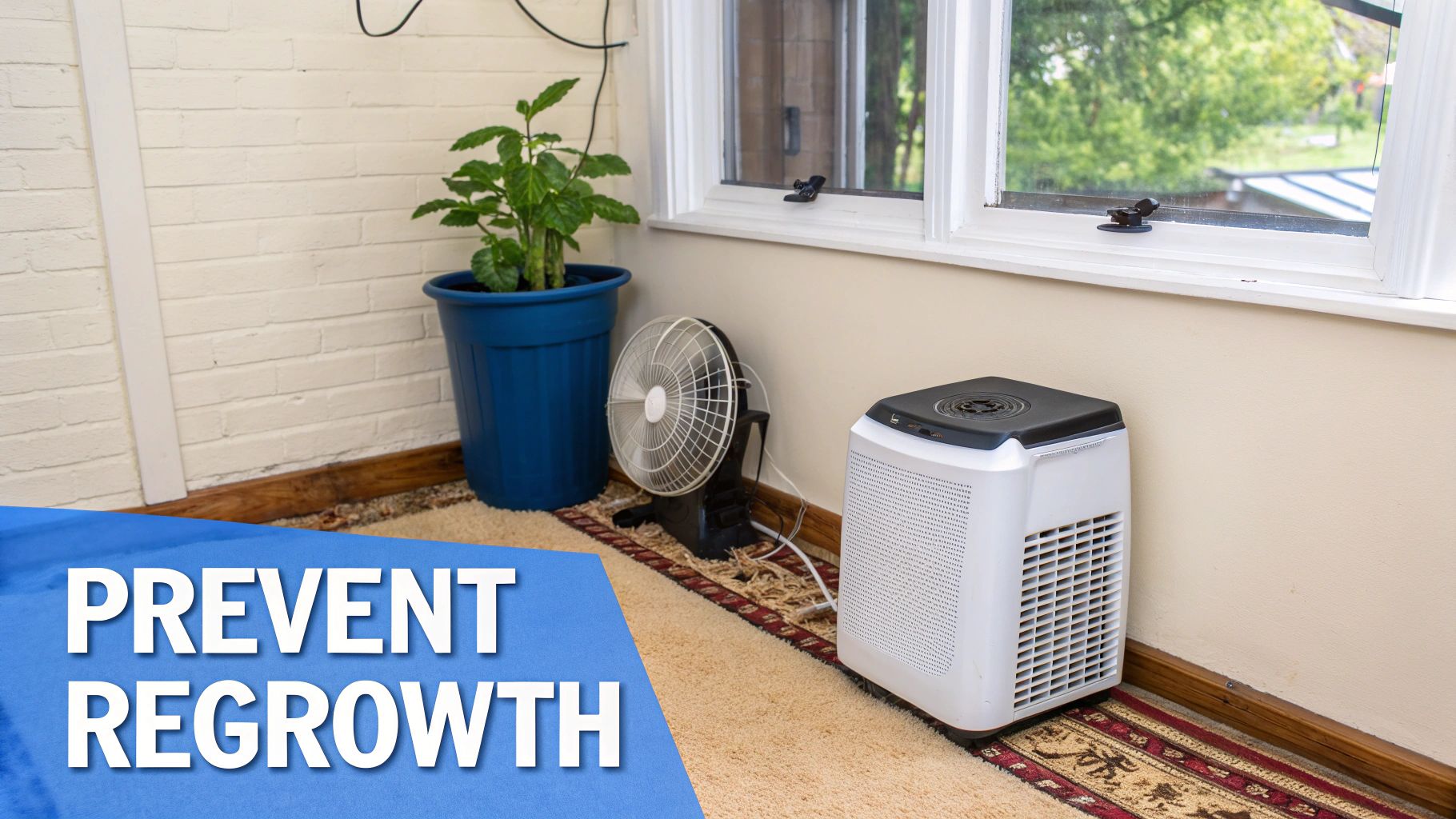
You’ve gone through the work of getting rid of the mold, which is a huge accomplishment. But the job isn’t quite done. The real victory is making sure that mold never gets a chance to return.
Preventing regrowth is all about creating an environment where mold simply can’t get a foothold. It all starts with moisture control.
Your most powerful tool here is managing your home’s indoor humidity. Mold loves moisture, so if you keep your humidity levels between 30% and 50%, you make your home a pretty inhospitable place for it. A good dehumidifier, especially in damp-prone areas like basements or laundry rooms, is a smart investment in your home’s health.
Proactive Moisture Management
Beyond just dealing with the moisture in the air, you need to be on high alert for potential water sources. This means being vigilant about leaks and spills, no matter how insignificant they might seem at first.
- Fix Leaks Immediately: That slow drip under the kitchen sink or a leaky window seal can quietly feed a hidden mold problem for months. Make it a habit to regularly inspect pipes, faucets, and fixtures.
- Ensure Proper Ventilation: Kitchens and bathrooms are moisture factories. Always run your exhaust fans during and after you shower or cook to get that humid air outside where it belongs.
- Clean Spills Promptly: Don’t let spills soak in. Blot them up right away and use fans or a cloth to make sure the area is bone dry, all the way down to the underpad.
In Canada, dealing with a recurring mold problem can get expensive fast. Because carpets are so porous, experts often recommend a full replacement to guarantee the mold doesn’t come back—making prevention absolutely critical for your wallet. For more comprehensive strategies for managing organic growth, you can find great insights in articles that cover preventing things like moss and algae.
Enhance Your Air Quality For Long-Term Protection
To truly defend your home against mold, you have to think about the airborne spores. These microscopic particles are everywhere, just waiting for a damp surface to call home. This is where a high-quality air purifier becomes a non-negotiable part of your prevention plan.
An air purifier acts as your home’s 24/7 security guard, capturing mold spores before they have a chance to settle and grow. It’s a proactive measure that supports all your other moisture-control efforts.
For ultimate protection, we highly recommend the Amaircare 3000 air purifier. Its powerful HEPA filtration system is specifically built to trap tiny particles like mold spores, dust mites, and other allergens, literally scrubbing them from the air you breathe.
By continuously cleaning the air, the Amaircare 3000 doesn’t just help with your respiratory health; it creates a cleaner indoor environment where mold has a tough time establishing itself. At Simon Air Quality, we believe in providing solutions that tackle both the immediate problem and long-term prevention, ensuring your home remains the healthy sanctuary it should be.
Even after you’ve got a game plan, it’s natural for questions to surface when you’re up against something like carpet mold. Getting straight, reliable answers is the key to making sure you’re handling things safely and effectively. Let’s tackle some of the most common things homeowners ask us.
“Can I Just Use Bleach to Kill the Mold on My Carpet?”
This is a big one, and our advice is always a firm no. We strongly advise against using bleach on carpets. While it’s a powerhouse on hard, non-porous surfaces like tile, it just doesn’t work on soft, porous materials.
Bleach can’t get deep enough into the carpet fibres to eliminate the mold’s roots. That means the mold will almost certainly come back. On top of that, bleach will cause permanent discoloration, completely ruining the look of your carpet. It also gives off harsh fumes that are rough to breathe in, especially in a space without great ventilation. Your best bet is to stick with solutions like a vinegar mixture or a cleaner made specifically for this job.
“How Quickly Can Mold Actually Grow in a Wet Carpet?”
It’s shockingly fast. Mold can start to grow in a damp carpet in as little as 24 to 48 hours, particularly if the room is warm and humid. This incredibly short window is exactly why you need to act immediately after any spill, leak, or flood.
The longer any part of your carpet stays wet, the higher the risk of a serious mold problem taking root. Getting that carpet dry, and keeping it dry, is your single best defense.
“Will My Homeowners Insurance Cover This?”
This really comes down to the fine print in your policy and, most importantly, what caused the moisture in the first place. If the mold is the direct result of a sudden, covered event like a burst pipe, there’s a good chance your policy will cover the remediation.
However, mold that grows because of a gradual issue—like ongoing high humidity, a slow and undetected leak, or general lack of maintenance—is often excluded from standard insurance policies. It’s crucial to review your policy documents and have a direct conversation with your provider to know exactly where you stand. If you do need to file a claim, Simon Air Quality can provide all the necessary documentation for our professional remediation services.
At Simon Air Quality, we know that a truly healthy home is about more than just what you can see. If you’re worried about invisible threats like airborne mold spores and other allergens, investing in a high-quality air purifier is a powerful move. The Amaircare 3000 air purifier uses advanced HEPA filtration to continuously scrub your indoor air, helping to prevent future problems before they start.


