

Cleaning your air vents isn’t just another chore to tick off the list; it’s a vital piece of home maintenance that directly impacts the air you breathe, how well your HVAC system runs, and even your family’s health. It involves a detailed process to remove all the built-up dust, allergens, mold spores, and other contaminants hiding deep within your ductwork, ensuring the air circulated throughout your home is clean and safe.
Why Clean Air Vents Are Your First Line of Defense
Think of your home’s ventilation system as its lungs. This complex network of ducts is constantly pulling air in and pushing it out to every single room, creating the indoor environment you live in. When that system is clean, you get fresh, healthy air. But when it’s neglected, it becomes a superhighway for all sorts of invisible contaminants, like mold spores and bacteria, poisoning the very air you and your family breathe every day.
It doesn’t take long for dust, pet dander, pollen, and other allergens to build up inside those dark, hidden ducts. And that’s not all. Microscopic bacteria and chemical residues from everyday things like cleaning sprays and air fresheners also settle in this network. Each time your furnace or air conditioner kicks on, these particles are dislodged and blown directly back into your living spaces, circulating over and over again.
The Hidden Health Connection
This constant recirculation of pollutants can have a real, tangible impact on your well-being. The link between poor indoor air quality and nagging health problems is well-established, but the symptoms are often easy to write off as something else. This is particularly true for hidden threats like mold, which can thrive undetected in damp ductwork.
- Aggravated Allergies and Asthma: For anyone with respiratory sensitivities, contaminated air is a constant trigger. Mold spores, dust mites, and pet dander are potent allergens that can cause persistent flare-ups. This is especially true for children and the elderly, who are more vulnerable to airborne irritants.
- Persistent Respiratory Issues: That cough, sneeze, or stuffy nose that never seems to go away—but gets better when you leave the house—can often be traced right back to dirty ductwork circulating contaminants.
- Silent Mold Proliferation: Air vents are the perfect travel system for mold spores. A small, unseen patch of mold in one corner can quickly spread throughout your entire home via the ventilation system. This makes professional air ventilation cleaning a non-negotiable part of any real mold removal strategy. At Simon Air Quality, we see this often; a seemingly minor issue becomes a whole-home problem because the HVAC system spread it everywhere.
A professional cleaning goes far beyond just sucking out some dust. It’s a proactive health measure. You’re eliminating hidden reservoirs of contaminants and stopping potential threats like mold before they mushroom into a major problem requiring extensive mold removal services.
A Growing Awareness of Air Quality
People are catching on. Concerns over indoor air quality aren’t just talk; the trend is clear. For instance, the Cleaner Air Partnership noted a huge jump in duct cleaning services in areas struggling with air quality. In Sacramento County, professional cleanings shot up from about 1,200 in 2020 to over 3,500 in 2024—that’s a 192% increase. This surge is directly tied to the region’s increase in hazardous air quality days, which you can read about in the State of the Air report. It shows people are finally understanding how crucial clean indoor air really is.
Ultimately, getting a professional service is an essential step. If you’re looking for more ways to clear the air, our guide on how to improve indoor air quality at home has plenty of other helpful tips.
Warning Signs Your Vents Need Professional Cleaning
Your home’s ventilation system rarely shouts when there’s a problem; instead, it whispers. Learning to pick up on these subtle (and sometimes not-so-subtle) cues is the key to keeping your indoor air healthy. It’s about more than just seeing a layer of dust on a vent cover—it’s about spotting issues before they turn into major health hazards like a mold infestation or lead to expensive repairs.
One of the biggest red flags is often something you can smell. Do you get a whiff of a persistent musty or damp odour every time the furnace or air conditioner kicks in? That smell is often the very first sign of moisture buildup or, even worse, mold growth hiding deep inside the ductwork. It’s an earthy, stale odour that no amount of cleaning or air fresheners can cover up because the source is buried within the system itself. This is a primary indicator that you need to call professionals like Simon Air Quality for an inspection.
Listening to Your Body and Your Home
Another huge clue is how you and your family feel inside the house. Do allergy or asthma symptoms seem to flare up indoors, only to get better when you go outside? If so, your indoor air quality is a likely culprit. Dust, pet dander, and particularly mold spores can get trapped in dirty ducts, building up to high concentrations and turning your home into a reservoir of irritants that get recirculated every time the system runs.
You also need to keep an eye out for the visual evidence around your home.
- So. Much. Dust. Are you constantly wiping down surfaces, only for a fresh layer of dust to settle almost immediately? This is a classic sign that your ventilation system is blowing more dust around than it’s filtering out.
- Debris in the Vents: Take a quick peek at your supply and return air registers. If you can see clumps of dirt, pet hair, or other gunk collected on the grilles, you can bet the ducts behind them are just as contaminated.
- Mysterious Dark Stains: Look for black or dark smudges on the walls, ceiling, or carpet right around your vents. This could be “ghosting,” where fine dust particles stick to surfaces, but it can also be an early warning sign of mold growth, which requires immediate attention.
If you spot any discoloration or catch that musty smell, it’s a clear signal to dig deeper. Mold growth in an HVAC system can spread spores throughout your entire house, posing a serious health risk. The only way to know for sure what’s going on inside your ducts is to get a professional inspection from a team like Simon Air Quality. Our mold removal services are designed to tackle these exact hidden threats.
Below is a quick reference guide to help you identify common signs that your air ventilation system needs professional attention.
Home Ventilation Health Checklist
| Symptom | What to Look For or Notice | What It Could Mean |
|---|---|---|
| Persistent Odours | A musty, damp, or stale smell when the HVAC system turns on. | Moisture buildup, potential mold or mildew growth in ducts. |
| Increased Allergies | Worsening allergy or asthma symptoms that improve when you leave the house. | High levels of dust, dander, and mold spores circulating in the air. |
| Excessive Dust | Surfaces get dusty again very quickly after cleaning. | Ducts are clogged and blowing dust back into your rooms. |
| Visible Debris | Dirt, pet hair, or cobwebs are visible on or inside the vent grilles. | The entire duct system is likely contaminated with debris. |
| Dark Stains | Black or dark marks appearing on surfaces around the vents. | “Ghosting” from dust filtration or a potential sign of mold. |
| Uneven Airflow | Some rooms feel stuffy or have weak airflow compared to others. | Blockages or obstructions within the ductwork. |
This checklist isn’t exhaustive, but if you’re noticing one or more of these symptoms, especially musty odours, it’s a strong indication that your system is due for a cleaning.
Uncovering Hidden Mold Growth
Mold is a particularly nasty problem. It doesn’t take much—even a small amount of condensation inside your HVAC unit or ducts can create the perfect breeding ground. If you suspect you have an issue, you can try a visual check of accessible spots, like the inside of the return air plenum.
But if you see anything that looks like mold, it’s critical that you don’t disturb it, as this can release millions of spores into the air. For a safe and reliable assessment, you can learn more about how to test for mold in your house from our detailed guide. Catching these signs early means you can schedule a professional air ventilation cleaning and targeted mold removal before a small problem gets much, much bigger.
What a Professional Ventilation Cleaning Actually Looks Like
When you bring in a professional for an air ventilation cleaning, you’re getting a service that goes far beyond just sticking a vacuum hose into your vents. Here at Simon Air Quality, we treat it as a full-scale restoration of your home’s entire circulatory system. The process doesn’t even start with cleaning—it begins with a detailed inspection, often using a specialized camera to get a clear picture of your ductwork and spot problem areas, like heavy debris piles, moisture, or potential mold growth.
This initial look-around is absolutely critical. It helps our technicians understand the specific layout of your system and find any hidden problems, like disconnected ducts or mold colonies that require specialized mold removal services. This is no one-size-fits-all job; it’s a careful diagnostic that ensures the cleaning is as effective and safe as possible for your home.
This infographic breaks down some of the common red flags—from dust to odors and allergies—that tell homeowners it’s time to call in the pros.
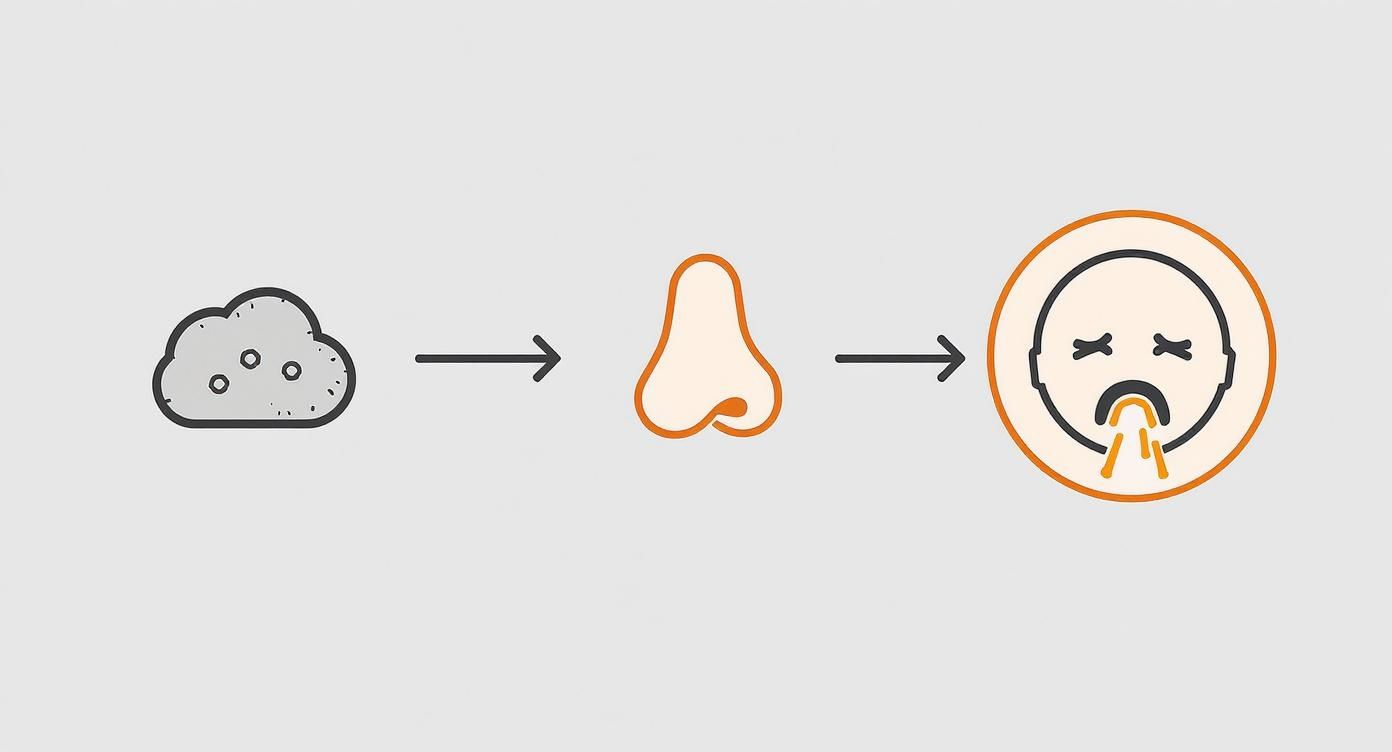
These are often the first clues that something is amiss within the hidden network of your home’s ventilation.
Creating a Controlled Environment
Once the inspection is done, the real work starts by setting up a contained workspace. The team seals off every supply and return register in your home, creating a closed-loop system. This step is non-negotiable because it allows us to create powerful negative pressure with a massive, high-powered vacuum that vents everything directly outside.
Think of it as putting your whole duct system under powerful suction. This negative pressure makes sure that as grime, debris, and dangerous mold spores are knocked loose deep inside the ducts, there’s only one direction for them to go: straight into the vacuum’s collection unit. It’s the key to preventing contaminants from getting kicked back into your living space during the cleaning.
The Agitation and Removal Phase
With the system sealed and under negative pressure, the technicians can finally start breaking up the buildup inside the ducts. They’ll feed specialized tools deep into the ductwork, such as:
- Rotary Brushes: These are powerful, spinning brushes that scrub the inside surfaces of the ducts, breaking free years of caked-on dust, pet dander, and other gunk.
- High-Pressure Air Whips: These tools shoot compressed air in a 360-degree pattern, dislodging contaminants from every corner and pushing them towards the main vacuum line.
It’s this one-two punch of agitation and suction that makes a professional service so much more effective than any DIY attempt. The process is methodical, working from the farthest vent back toward the main unit to ensure every single inch of ductwork gets the attention it needs. To see everything this service covers, you can explore the details of our furnace and duct cleaning services.
The technology behind duct cleaning has come a long way. The National Air Duct Cleaners Association (NADCA) reports that the use of high-tech robotic cleaning tools has jumped by 60% since 2020 alone.
If mold is found during the inspection, the process becomes even more meticulous. Our mold removal services incorporate specialized techniques, including the application of antimicrobial treatments, to contain and kill the growth, making absolutely sure that spores aren’t spread to other parts of your home. This careful, professional approach gives you the peace of mind that your family’s health and safety are the top priority.
Beyond Cleaning: How to Maintain Pure Air Daily
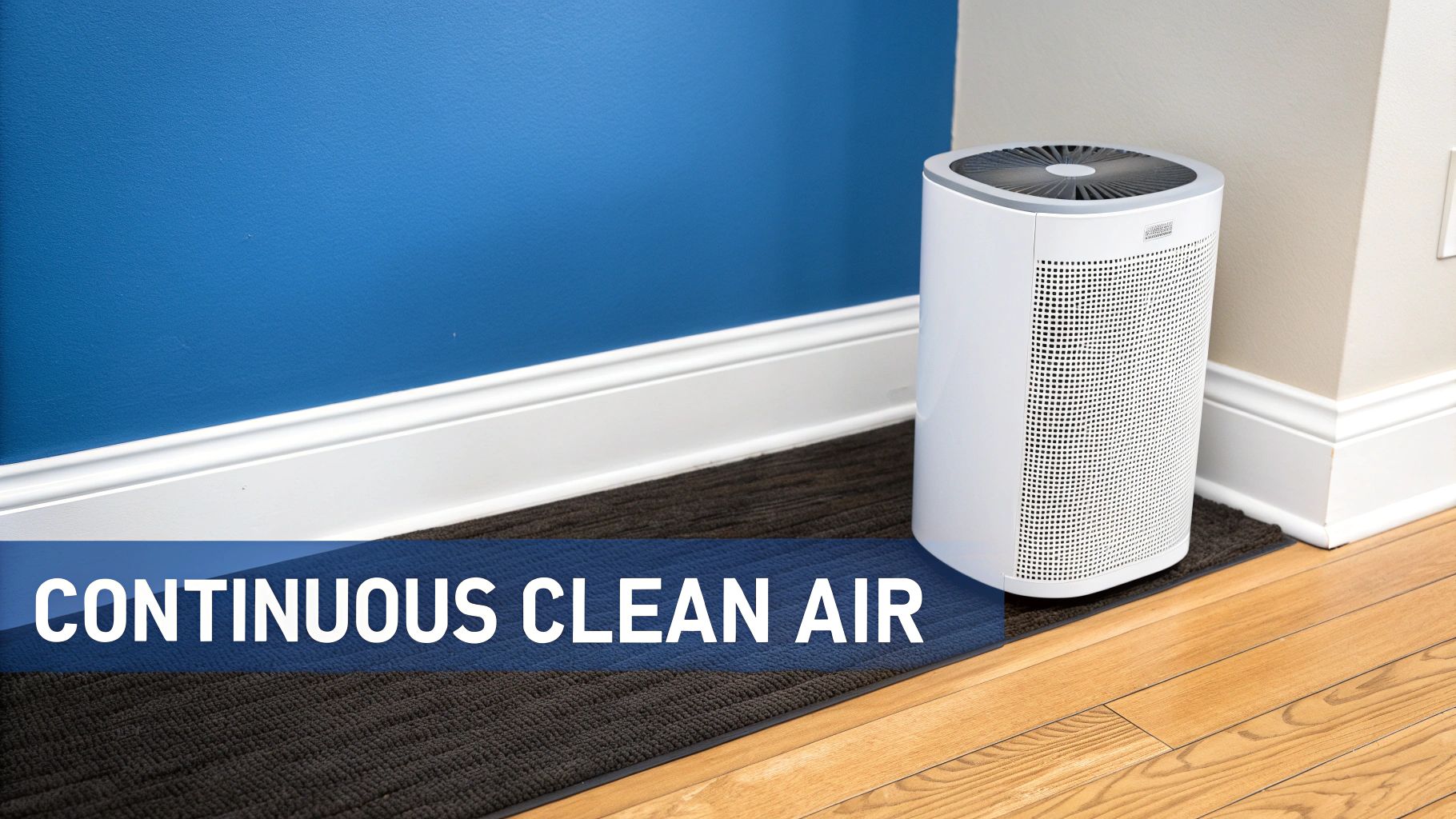
A professional air ventilation cleaning is like hitting a giant reset button for your home’s air. It’s a fantastic feeling knowing the pathways are clear of dust, allergens, and hidden mould spores. But that pristine state won’t last forever on its own. To maintain that purity, you need a daily strategy to manage the invisible threats that are always finding their way back into your environment.
Even after we’ve done a thorough cleaning, your home is still exposed to airborne particles. Volatile Organic Compounds (VOCs) are released from common household items like cleaning supplies, furniture, and even scented candles. On top of that, microscopic particles like bacteria, viruses, and fine dust can easily sneak past even high-quality HVAC filters. This is where a dedicated air purifier becomes an essential part of the long-term solution.
Creating a Continuous Defense System
An air purifier works around the clock, actively filtering the air in your living spaces. Think of it as a constant guardian, capturing the tiny contaminants that your ventilation system might miss or that are introduced long after a cleaning is done. This creates a powerful, two-pronged approach to managing your air quality.
Your clean vents ensure the air being circulated is free from built-up debris. An air purifier then scrubs that same air of microscopic pollutants. Together, they form a complete system for maintaining a truly healthy indoor environment.
Basically, your HVAC system handles the large-scale air circulation, while a high-performance purifier takes care of the fine-detail work.
The Right Tool for the Job
To really be effective against the smallest and most harmful particles, you need a purifier with a high-efficiency particulate air (HEPA) filter. These filters are specifically engineered to trap 99.97% of particles as small as 0.3 microns—that includes most allergens, mold spores, and bacteria.
For homeowners who are serious about long-term air quality, the Amaircare 3000 air purifier is an exceptional choice. It’s designed for exactly this purpose, featuring a robust HEPA filtration system that works tirelessly to pull contaminants out of your breathing space. Placing one in a central area or a high-traffic room ensures that the benefits of your professional vent cleaning are preserved and even amplified, day after day.
Pairing a top-tier device like the Amaircare 3000 air purifier with your newly cleaned ventilation system is the vital next step. It bridges the gap between a one-time service and a continuous commitment to pure, healthy air for your family.
Simple Habits for Long-Lasting Clean Vents
Once you’ve had a professional air ventilation cleaning, the air in your home gets a complete reset. But keeping it that way for the long haul comes down to a few simple, consistent habits. These small actions make a massive difference, extending the benefits of that deep clean and protecting your HVAC system and your family’s health.
The single most important thing you can do is change your HVAC filter regularly. It’s that simple. When a filter gets clogged with dirt, it can’t do its job properly. This forces your system to work overtime and lets dust and allergens sneak right past it, settling back into your freshly cleaned ducts. Make it a habit to check the filter monthly and replace it at least every 90 days. If you have pets or live in a particularly dusty area, you’ll want to do it even more often.
Choosing the Right Filter and Keeping Vents Clear
When you’re grabbing a new filter, take a look at its MERV (Minimum Efficiency Reporting Value) rating. A higher MERV number means it can trap smaller particles, which is great. However, going too high can restrict airflow and put a strain on your HVAC system.
For most homes, a filter with a MERV rating between 8 and 11 strikes the perfect balance between solid filtration and efficient airflow.
Another easy win is just keeping your vent registers clean and unobstructed.
- Wipe Them Down: Once a week, grab a damp cloth and give your supply and return vent covers a quick wipe. This prevents that visible dust from building up and getting sucked right back into the system.
- Keep Them Clear: Check to make sure furniture, rugs, or curtains aren’t blocking any vents. Obstructed airflow throws the pressure off in your system, making it less efficient and sometimes even leading to moisture problems.
Among various routine property upkeep tasks, establishing effective habits for maintaining clean air vents contributes significantly to indoor air quality and tenant satisfaction. It’s a foundational part of responsible homeownership.
Managing Humidity and Invisible Threats
Keeping your indoor humidity in check is a huge piece of the puzzle, especially when it comes to preventing mold. Mold loves dark, damp places, and your ductwork can become a perfect breeding ground if condensation starts to form. Try to keep your home’s humidity level between 30% and 50%. You can usually manage this with dehumidifiers or by adjusting your air conditioner’s settings. This simple step makes your vents a much less welcoming place for mold to grow.
Finally, don’t forget that your HVAC system circulates everything in your home’s air—including dangers you can’t see or smell. One of the most serious is radon, a radioactive gas that can seep into your home right from the ground below. Because your ventilation system pulls air from the lower levels of your house and distributes it everywhere, it can effectively spread radon gas into every single room.
This shows why a total approach to air safety is so crucial. A clean ventilation system is a must, but making sure the air it’s circulating is free from invisible hazards like radon is just as important. Radon services from Simon Air Quality tackle these unseen threats directly. Combining professional air ventilation cleaning with radon testing and mitigation ensures your home is truly safe from the ground up, giving you complete peace of mind.
Common Questions About Air Ventilation Cleaning
If you’re thinking about getting your air vents professionally cleaned, you probably have a few questions. That’s completely normal. Most homeowners want to be sure they’re making a smart investment for their property and their family’s well-being. We get asked these questions all the time, so let’s clear the air on some of the most common ones.
One of the first things people wonder is how often this service is really needed. For a standard family home—no heavy smokers, major pet dander issues, or big renovations—a professional cleaning every three to five years is a good rule of thumb. However, if you’ve recently dealt with something like a mould problem, getting the vents cleaned is a non-negotiable part of the remediation to stop spores from circulating through your home. Simon Air Quality always includes this as part of our comprehensive mold removal services.
What to Look For in a Reputable Company
Let’s be honest, not all cleaning services are created equal, so you need to know what to look for. Your best bet is to choose a company that’s certified and sticks to industry standards.
Look for certifications from groups like the National Air Duct Cleaners Association (NADCA). This tells you their technicians are properly trained and follow a strict code of ethics. It’s your guarantee that they’ll use the right gear—like high-powered negative air pressure vacuums and proper agitation tools—to do the job correctly without damaging your system or, even worse, spreading contaminants around your house.
Another common question is about the time commitment. How long does an air ventilation cleaning actually take? For an average-sized home of about 2,000 square feet, you should expect the process to last between three to five hours. The exact time can change based on your home’s size, how complex the ductwork is, and how dirty things are. If a company promises to be in and out in an hour, that’s a major red flag that they’re cutting corners.
A truly thorough cleaning involves sealing every single vent, setting up a proper containment system, and then methodically cleaning each section of ductwork. Rushing this process almost guarantees that dust, debris, and other junk will be left behind.
The Impact on Your Energy Bills
Finally, a big one: can a clean system actually lower my energy bills? The answer is a definite yes.
When your ducts are clogged with layers of dust and debris, your HVAC system has to work much harder just to push air through. That extra effort uses a lot more energy. In fact, studies have shown that cleaning out HVAC systems can lead to some serious energy savings—we’re talking reductions in fan and blower energy use anywhere from 41% to 60%.
By removing all that buildup, you restore proper airflow, letting your system run at the efficiency it was designed for. This doesn’t just help trim your monthly utility costs; it also helps your equipment last longer by reducing all that unnecessary strain. Think of it as an investment that pays for itself through a healthier home and a more efficient HVAC system.
At Simon Air Quality, we believe in giving you clear, honest answers and expert service to make sure your home’s air is as clean and safe as it can be. From mold remediation to radon mitigation, we offer a full range of solutions for creating a healthier indoor environment. Learn more about how we can help by visiting our website.


